Pasture to Plate
in the Sunflower State
Sunflower Wagyu
Southwest Kansas is home to beef and small town beliefs. When two growing businesses saw an opportunity to help each other grow the idea of Sunflower Wagyu was born. Bradon & Rachael Wien's love for wagyu and raising a product superior in U.S. was met with Chad & Tiffany Ziebart's passion of processing and marketing beef. The ability to raise and process beef in the same zip code is unique and will help insure the highest quality of beef. The Wiens' will continue to pursue and increase their herd and genetics through the ability to capture an MIJ of each carcass that is processed. This additional information will prove to be extremely beneficial to the long term herd growth and development. Raising the beef minutes away from the Ziebarts' processing facility will allow everyone to work cohesively to provide a finished animal that is harvested at it's peak.
Double W Ranch
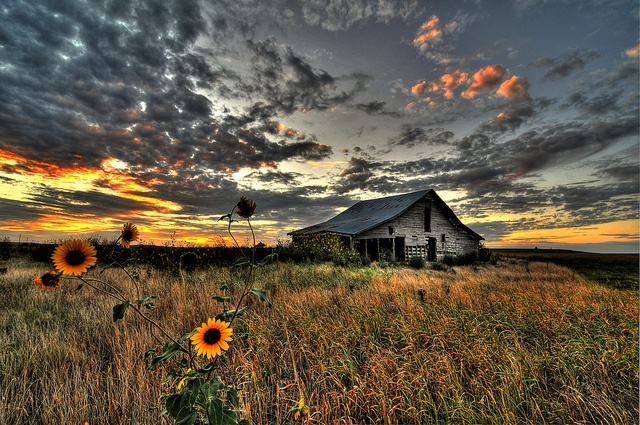
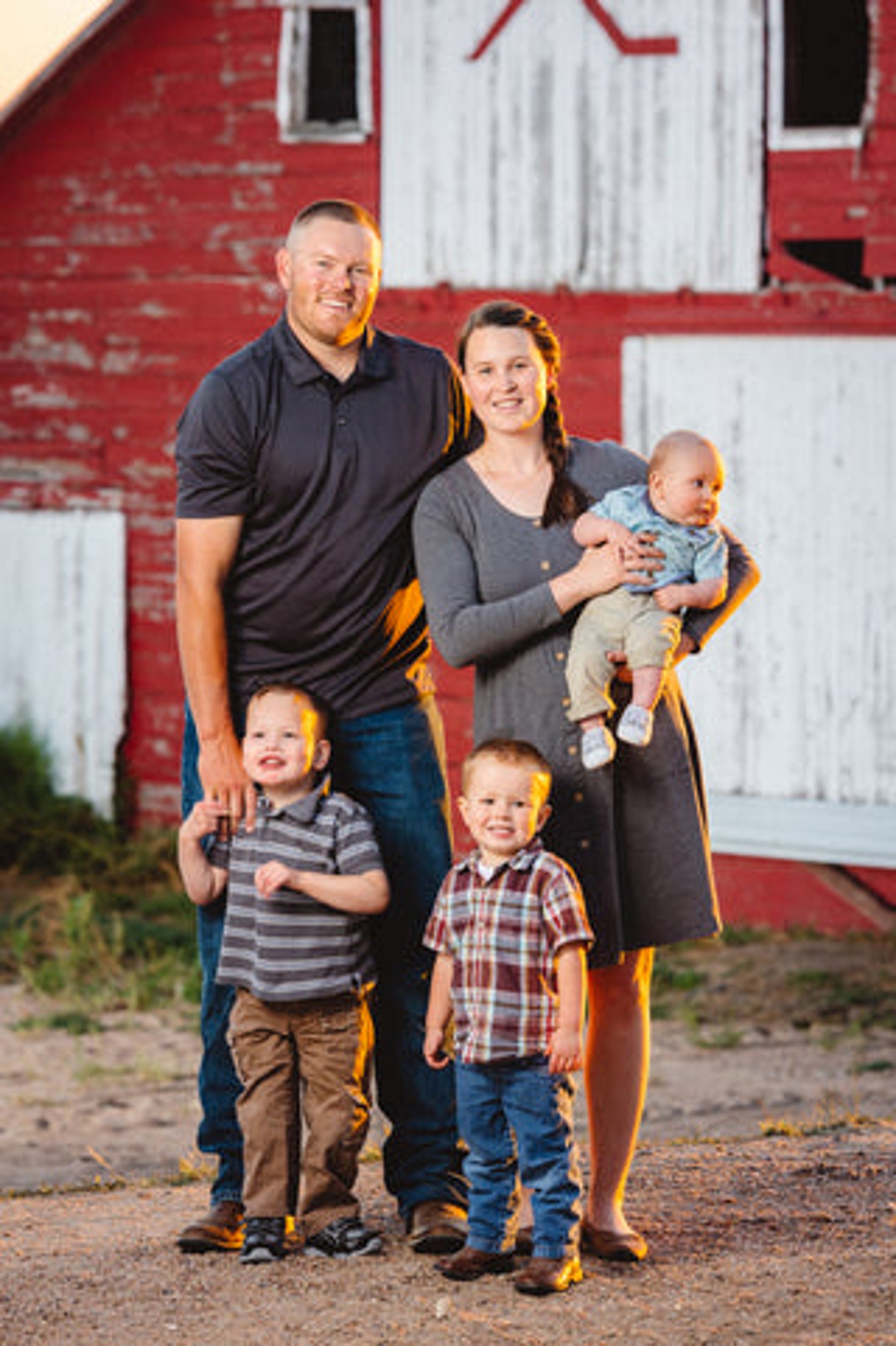
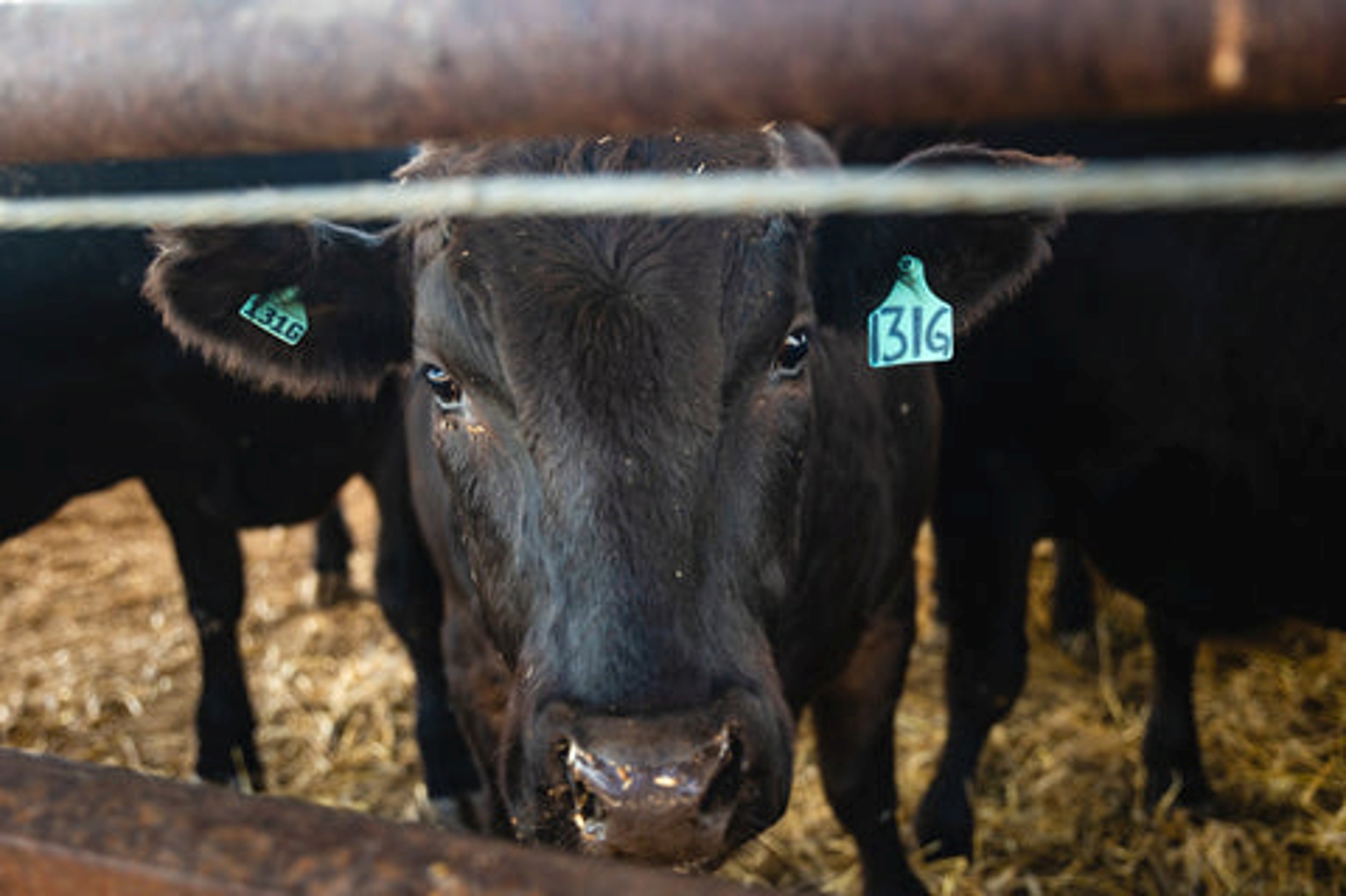
We are a fourth generation family owned and operated farm and ranch with a history that started in the late 1800’s when K.L. Wiens “jumped ship to America.” While the machinery, crop yields, and cattle numbers have changed, our passion to make a living feeding people has not. From our beginning, cattle and wheat have been the heartbeat of our operation. While most of what we do revolves around these two operations, we also grow grain sorghum and feed sorghum for our cattle to graze in the fall. We also put up most of our own hay and straw to be fed in the winter months. Our Wagyu side of things came in early 2015 when my love for cattle collided with my love for cooking and a good steak. I studied the breed and liked what I saw; but what really set the hook was a taste of the juiciest, richest, best-tasting piece of meat I had ever sunk my teeth into. When it finally clicked that I could raise these cattle I set out to find out how I could make it work. Jumping into the Wagyu breed with no prior knowledge of Wagyu proved to have many hurdles, but I was determined to learn as much as I could in order to be successful and produce a top quality product. From the beginning, my philosophy was to not cut corners. I wanted to be the best. I found successful and established men in the Wagyu breed who held those same ideals and I picked their brains till they were tired of me. I connected with Don Brown who has been in the breed nearly since its conception in America. He has worked closely with one of the best Wagyu breeders in Japan named Shogo Tekada and has used his model of breeding to produce a balanced, very high marbling and tender beef. Because there are so few Fullblood Wagyu in the U.S., a registered fullblood animal does not come cheap. The best route to start my Wagyu herd was through embryo transfer. I bought 30 Angus cows and transferred some of Don’s best Fullblood Wagyu embryos into them so I could start the base of my herd with the best genetics I could find. I also learned and followed as much as I could from Dr. Horner. He is a nutritionist who is the “go to” Wagyu nutritionist not only in the U.S. but also In Japan. Before Wagyu was even in the U.S., Dr. Horner was traveling to Japan to help formulate rations and improve the health of Wagyu. He tells me exactly what I need to be feeding my cattle and how I need to be taking care of them in order to reach the full potential of this wonderful breed.While Wiens Wagyu does not have a long history in the breed, we have surrounded ourselves with experts who know Wagyu inside and out. In some ways, starting with a clean slate has been good. I am able to start my herd along side where the best Wagyu breeders are at today. I know there is no such thing as an original idea so I have learned from the best and in turn I can give the best to my customers. Our History Our story starts with KL Wiens (our great grandpa), his full name Kornelius L. Wiens. It is said, he ‘jumped ship’ at age 17 to come to America from Prussia back in the late 1800s and he came to live in central Kansas to be with family. While there he met his wife to be, Agatha. They were wed in 1912 and moved to her family's area near Meade, Kansas where we currently farm. Agatha’s parents gave them 80 acres to farm and they built a small farmhouse on the land in 1925. By 1929 KL built our current house. (During the early years of their marriage KL worked the land and helped others build their homes).KL suffered hardships during his life with losing his brother in World War I and losing a child in a crib fire. Agatha and KL raised 6 children; Rolly (our grandfather) is the youngest of the 6. Agatha had complications in giving birth that resulted in her becoming crippled. KL continued to work hard and he aggressively bought and rented land to provide for his family.Grandpa will never forget July 4, 1949 at the age of 10, when he witnessed his father's death. Back in those days, tractors did not have cabs and were operated with a hand clutch. On this day, as he maneuvered the tractor to get out of a washout, the tractor reared over backwards crushing KL and killing him instantly. It immediately burst into flames. They had the funeral in their home; there were so many people they could barely fit inside the farmhouse. Because of his father's death, at age 10, Rolly took on more responsibilities with the help of family and friends. Rolly bought his first piece of land at age 15.Rolly went to Tabor College in Hillsboro, Kansas. Where he met and eventually wed Marge Busenitz a fellow college student studying to be an elementary teacher. They were married in 1959. They spent their first year with Marge teaching 6th grade and Rolly working as a scrub nurse. They decided to come back to the family farm the next year.When they returned to Meade, Rolly farmed and supplemented their income with an off farm job. He also had 30 cows and calves. Eventually he started his own custom bailing work and also rented land to farm (Rolly and Marge were also aggressive in buying land and rented land when they could in the hopes to do more farming). They bought the original farmhouse from Rolly's mother, Agatha, and there they raised three children, 2 girls and one boy (Jerome) who is our dad. Jerome also attended Tabor College with a major in agriculture. Jerome stayed in prayer to know what God might have him to do for a career. Jerome married his high school sweetheart, Anita Newby, in 1984, who also attended Tabor college with a major in Elementary Education and they moved back to Meade. Rolly and Jerome worked together for many years and built up the cattle side of the farm by starting calves and feeding them throughout the winter. They continued to rent land to grow wheat and feed for cattle. Rolly and Marge received the Kansas Master Farmers and Master Farm Homemakers award in 1998 from Kansas State University.In 2004, Jerome began taking over the management so that Rolly could step back from all the responsibilities of what was now Double W Farms. Jerome continued to buy yearlings and grow them throughout the winter and sell them in the fall. Jerome, along with his wife Anita, stayed busy on the farm growing wheat, feed for cattle, and occasionally milo. Jerome and Anita raised four children 3 boys and 1 girl.His oldest boy, Bradon (my husband), loved farm work growing up and found every opportunity to stay outside helping out around the farm. Bradon decided to go to college to first see other options for careers before settling on working for Double W Farms. After a few years he decided that farming and ranching might just be the thing for him and started working full time for his dad in 2011. Bradon and I knew each other in high school and we reconnected during college. We were married December 2013. Like Rolly, our cattle operation started with just 30 Cows and calfs and we have started breeding Fullblood Wagyu Cattle in the hopes of providing for our family one day. After marriage, Bradon and I moved into the original farmhouse (that KL built). Bradon worked for his dad on the farm and I taught in town k-12 Art. Bradon has always had a passion for cooking and grilling. That love collided with his love for cattle when he learned of the Wagyu breed and ate a Wagyu steak. The chance to raise such world class beef was irresistible to Bradon. He set out to become the best he could at raising this breed by surrounding himself with the best in Wagyu in America. He continues to better his cattle by studying the breed, working with highly respected nutritionist of Wagyu cattle and by being counseled by highly respected Wagyu breeders in America.
Meade Locker and Processing, LLC
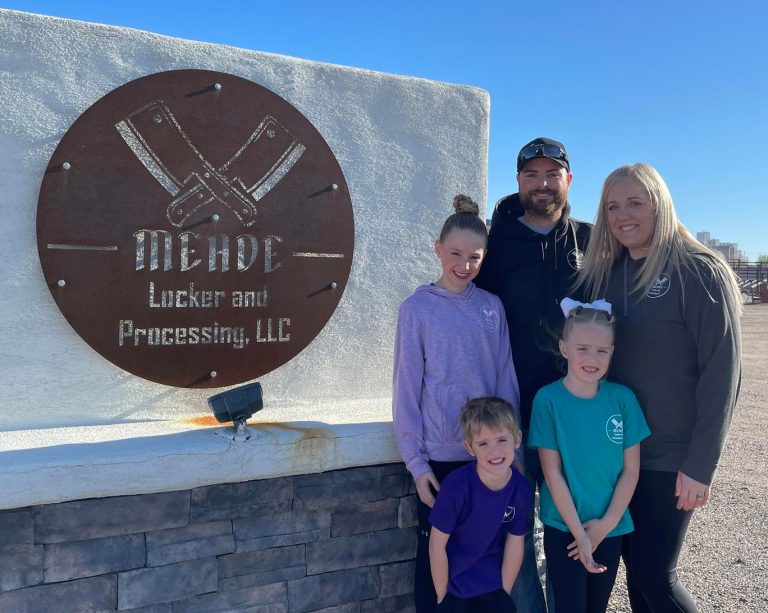
Meade Locker and Processing, LLC spurred from our love of hunting and processing wild game, servicing our community, and our personal desire to build something our entire family could be a part of. We previously owned and operated Top Rack Processing which exclusively processed wild game. During the 3 years Top Rack Processing was open, business boomed and grew to where we had to give everything up or go all in. God stepped in and showed us an opportunity. In March of 2020 the Covid pandemic began and our phones rang from local farmers and ranchers asking for farm butchers. State regulations would not allow it but we saw a void in our community and knew we could help.In the summer of 2020, we purchased the old bowling alley, quit our jobs, and went to work making Meade Locker and Processing a reality. In December of 2020, our doors unofficially opened for wild game processing where we processed just over 500 animals. Shortly after, in February of 2021, we began processing beef and hogs and then eventually we added lamb and goat to our facility.Demand continued to grow and between 2021 and 2025 we grew from a custom facility, to a state licensed processor and now we are processing under USDA inspection. Along the way we added a full retail store with fresh and frozen product, offering of purchasing by the side, and several specialty products such as jerky, bratwursts, summer sausage and other seasoned product. Our retail front offers over 200 different varieties of products and the creativity is still rolling out new flavors and options. In addition to retail expansion, we are very excited for the continued expansion of our processing division. Our goal upon opening was 10 head per week and have since grown to now processing 25-30 head each week. Of course, we could not have done this without the help of our beyond amazing team of employees. While we have grown much quicker than we imagined our goal is to keep chasing, keep growing, and never settle. This has led to additional opportunities to help grow our business as well as help others grow as well. In the Spring of 2026, Meade Locker & Processing, LLC rebranded it’s jerky and launched Major League Carnivore, LLC. The jerky customers love from Meade Locker got a “facelift” and the ability to be sold nationwide as Major League Carnivore. This allowed us to be able to secure distribution as well as offer online sales and shipping.A lot has changed in 6 years since we opened, however one thing remains the same, our customers. We would not be where we are today without the farmers, ranchers, and producers. As we look ahead, we see opportunities to help our loyal producers continue to grow as well. In the Fall of 2026, we look forward to helping launch Sunflower Wagyu, LLC. This new e-commerce site will allow customers nationwide to receive top quality, full blood, Wagyu beef, raised here at home, in Meade County Kansas with Double W Cattle.In true Meade Locker fashion, we can’t stop there, and we have to go all in. Sunflower Wagyu, LLC will allow us to offering shipping of products produced at Meade Locker as well as provide shipping opportunities for some of our local producers looking to expand in e-commerce sales.We cannot say thank you enough to everyone who has stuck with us over the years and continue to support us day in and day out. Without you, we wouldn’t be where we are today. Be sure to check back often to see what we are up to next!
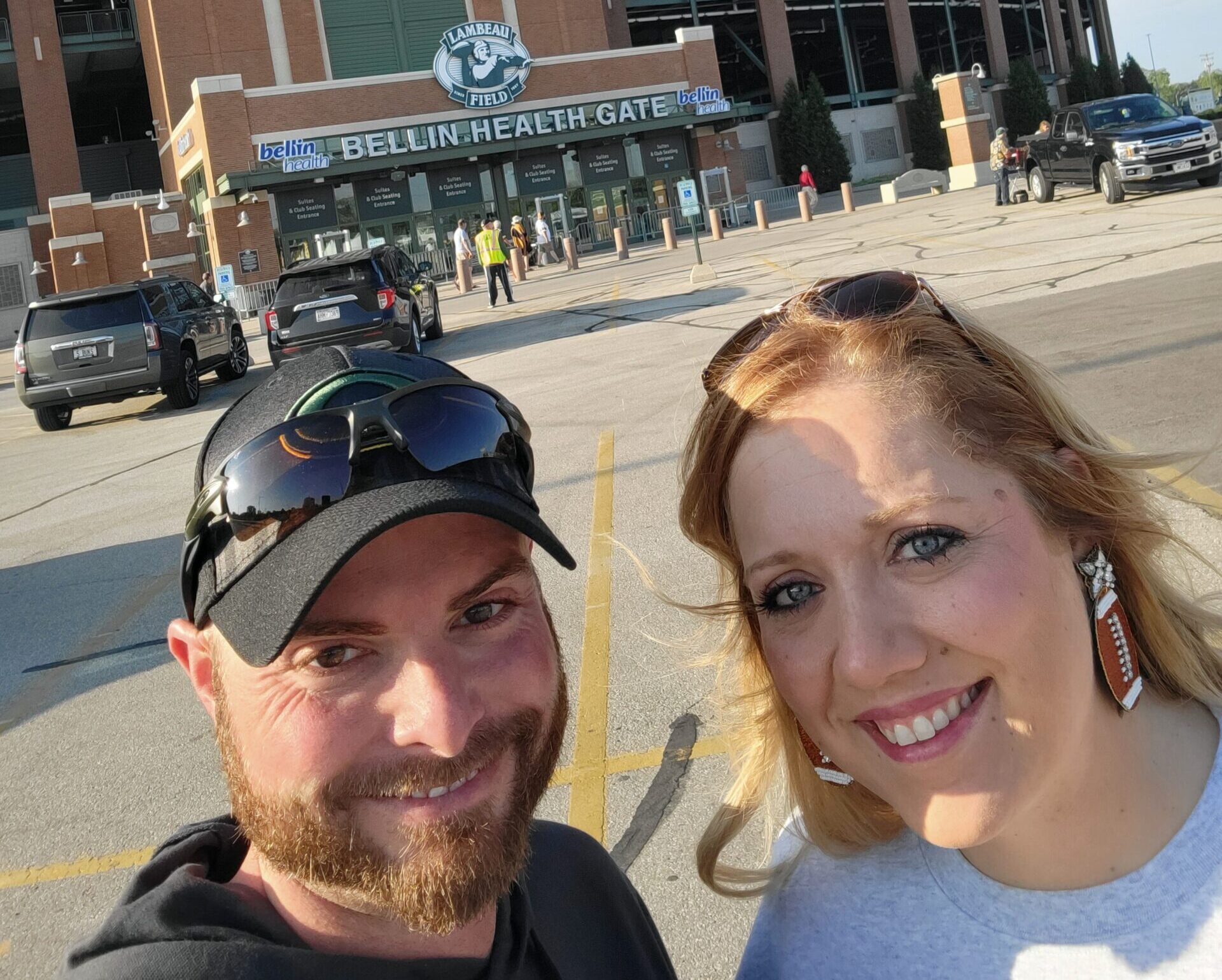
What makes Meade Locker so special for us is that it truly is a family affair. Often times our oldest daughter, Taylor, can be found creating social media content, working in the processing area, or helping customers in the retail front.Our middle daughter, Oakley, LOVES to help on the slaughter floor and is often our “trailer girl” who lets us know when trailers arrive to unload. She also is becoming more active in the retail front running the register and is beyond excited for the day we let her answer the phones.Our youngest, Lawson, is just now starting to show interest in helping the business…as long as he gets paid…he will not work for free, but he will work for snacks. He will help with things like stocking product, sampling new flavors, and holding lights or backgrounds for social media.We are so thankful for the opportunity that Meade Locker has given us to teach our children the value of hard work while showing them what it means to make a positive impact in their community.When we do get to step away from the business our family enjoys spending time in the deer blind, grilling and spending time in the back yard, watching our kids follow their passions of tennis and basketball, cheering on the Green Bay Packers and Kansas Jayhawks. We can’t wait to see you the next time you stop in!
-Chad and Tiffany Ziebart