Why Wagyu
Our Cattle Maintain a High Level of Welfare From Birth to Butcher.
Responsibly Pasture Raised
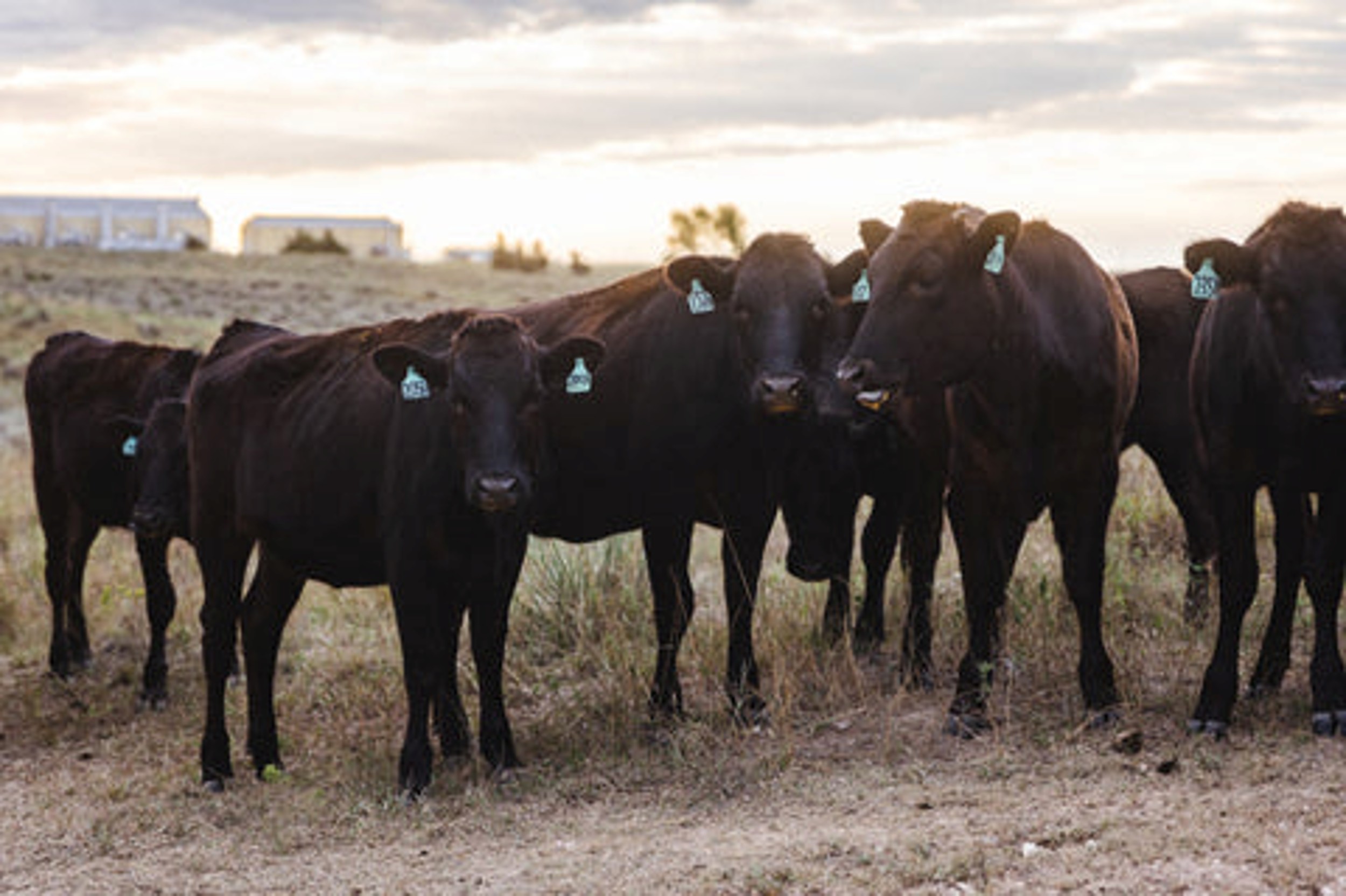
Our calves are born in the buffalo grass prairie of Southwest Kansas. Buffalo grass, is full of nutrients and high in protein, keeping our momma cows happy year round. Our calves stay with their moms on grass for the first 5 or 6 months of their life. We slowly wean our calves off their moms by introducing an all natural starter feed with probiotics, created by our nutritionist who specializes in the Wagyu breed. This feed replaces the calories from their mothers' milk and helps slowly change their rumen to a plant-based diet. Once they are eating enough starter feed and do not need their mothers, we put them in neighboring pastures so they can touch noses as they both learn to live independent of each other.
Responsibly Grown
After Weaning, our cattle are slowly grown to 800 lbs. In the summer, they reach that weight grazing our pastures. In the winter, the grass is less abundant and nutritious, so they are fed high-quality wheat hay or sudan grass hay from our farm with local distillers grain and corn or wheat or sorghum grain from our farm if possible.
Health Benefits of Wagyu
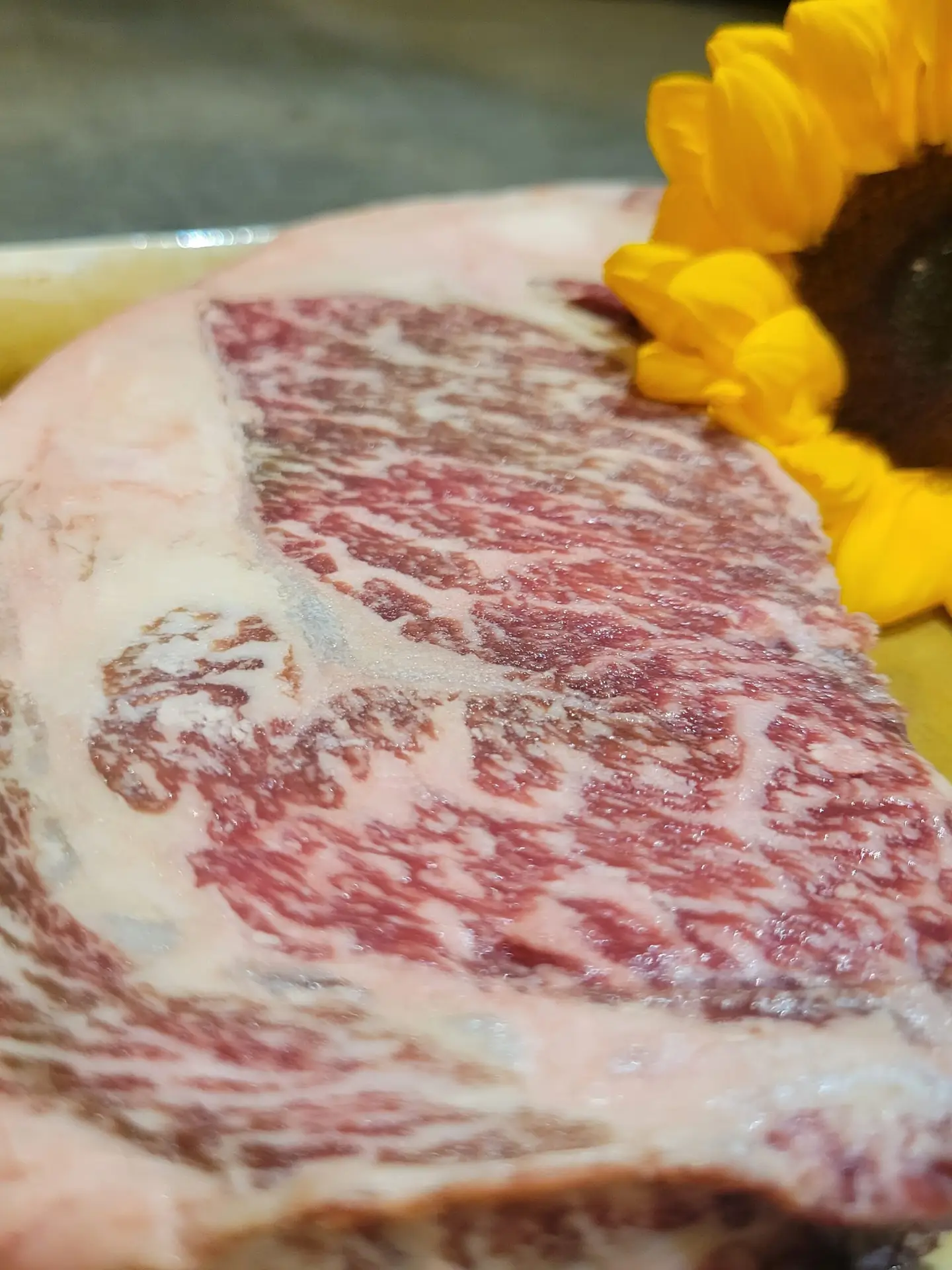
Marbling, or intramuscular fat, is what gives Wagyu its melt in your mouth texture and rich buttery taste. This is a soft fat with a lower melting point than other breeds, due to the high levels of monounsaturated fatty acids in Black Wagyu, (MUFA). This marbling in terms of flavor means really tasty, melt in your mouth literally.The scientific study report “Meat Produced By Japanese Black Cattle and Wagyu", published in Animal Sciences Publications, contains some very good information on Wagyu. If you are very interested in the scientific data about the type of fats found in our black wagyu go to Report HERE
In this report scroll down to page 49 to the section called 'Fatty Acid Composition of Current Japanese Black Beef' This would give you a better scientific explanation of the Black Wagyu which is what we have. Also, read the conclusion at the end.If you don't want to take the time to read the report basically they found that these cattle are genetically inclined to turn saturated fat into monounsaturated fat, making it not only tasty but healthy. Research is still being done to understand why they do this. Overall this genetic inclination produces an incredible product.
Sunflower Wagyu (FAQ)What is the Difference Between Fullblood Wagyu and American Wagyu?
Fullblood Wagyu are cattle whose DNA are 100% Wagyu breed and should be DNA verified to insure authenticity. American Wagyu are cattle who are crossbred with wagyu. They are at least 50% Wagyu and crossed with any other breed of cattle. At Wiens Wagyu we only raise 100% Fullblood Black Wagyu that are DNA verified. We can trace our Genetics back 6 generations to prized Japanese cattle. We also raise 'American Wagyu' but we call it 'Wagyu Angus Cross' because we believe that is a better description of what the product really is. What is Wagyu Angus Cross? Our Wagyu Angus Cross are born from Black Angus cows and sired by Fullblood Black Wagyu bulls. They are 50% Black Wagyu and 50% Black Angus. You can expect our Wagyu Angus Cross to be al least USDA Prime. Marbling varies animal to animal.Why is Wagyu Beef so expensive?Many factors play into the role of why Wagyu Beef costs more than other breeds of beef. The main factor is input cost, Wagyu cattle were not bred for efficiency like other breeds of cattle. For example when compared to Angus cattle, Wagyu cattle are fed at least twice as long before butchering which means they have ate much more food. Also Fullblood Wagyu are hard to come by and starting a Fullblood Wagyu herd is expensive if done right.Why is Wiens Wagyu beef so inexpensive?This may be a question we get more often then why Wagyu is expensive. The reason why we are so inexpensive for verified Fullblood Black Wagyu is that we don't have the middle man cost of selling our product. We sell direct to our customers. Our cattle are Fullblood Black Wagyu DNA Verified and registered through the American Wagyu Association it really is the real deal. We are not exporting any beef from Japan. We are raising Wagyu right on our Ranch. How long do you Dry-Age?We dry-age 21-28 days. The benefit of dry-aging is that by removing some moisture in the dry-aging process, you intensify the overall flavor the beef. We believe this really adds to the flavor of our beef. It is quite delicious and sets us apart from other beef producers. Do you ship to my Home?We do! We ship to all the US states except Hawaii and Alaska. We cannot ship outside the USA. We ship in Foam coolers with Dry Ice. Your Wagyu will arrive frozen or partially thawed ready to thaw in the fridge or put back in the freezer for another date. Are Your Animals Humanely Butchered? Yes! We take great care from Birth to Butcher that every day is a good day in the life of our cattle. That is one of the exciting parts of our job is that we can make sure every aspect of their lives is low-stress and comfortable. Low stress is good for them and us. They live great lives and they give us great Beef. Our slaughtering facility is USDA inspected, monitored and known for humane practices. Wagyu Cattle 和牛Wagyu cattle originate from Japan. In fact, the name Wagyu simply means Japanese beef. Now you may be thinking how can you have Wagyu in Kansas? Our operation has registered Black Wagyu cattle that can be traced back to Japan. The genetics of this breed of cattle is actually quite special.
How is Wagyu different than U.S. Beef?
The beef that most of us eat today in the U.S. comes mostly from European descent. Since its beginning in the U.S., it has evolved through selective breeding into a much different animal than what first stepped off the ships onto our shores many years ago. It is now a much better animal to supply beef to a growing population. It is hardier, and much more efficient at producing beef by growing quicker with less input cost. These are very good advancements both for the animal and for the people it feeds. Wagyu, on the other hand, has been selectively bred for different traits. In the mid-1900’s, Japanese breeders began selective breeding to increase marbling and tenderness. Where the U.S. had efficiency in mind, the Japanese cared more about the eating experience. Cattle in the U.S. can reach slaughter around 16 months, Wagyu reach slaughter 30 months or longer. Because they live longer they eat more feed which is one reason Wagyu brings a higher price.Health Benefits of Wagyu Marbling, or intramuscular fat, is what gives Wagyu its melt in your mouth texture and rich buttery taste. This is a soft fat with a lower melting point than other breeds, due to the high levels of monounsaturated fatty acids in Black Wagyu, (MUFA). This marbling in terms of flavor means really tasty, melt in your mouth literally. The scientific study report “Meat Produced By Japanese Black Cattle and Wagyu“, published in Animal Sciences Publications, contains some very good information on Wagyu. If you are very interested in the scientific data about the type of fats found in our black wagyu go to Report HERE
In this report scroll down to page 49 to the section called 'Fatty Acid Composition of Current Japanese Black Beef' This would give you a better scientific explanation of the Black Wagyu which is what we have. Also, read the conclusion at the end. If you don't want to take the time to read the report basically they found that these cattle are genetically inclined to turn saturated fat into monounsaturated fat, making it not only tasty but healthy. Research is still being done to understand why they do this. Overall this genetic inclination produces an incredible product.
You can also check out the American Wagyu Association website HERE
and scroll down to the health benefits section How does it get so marbled and tender? Wagyu is known for its melt in your mouth texture and amazing flavor. While the genetics of this breed are very important, how this animal is raised and fed is just as important. At Wiens Wagyu we focus on the nature (genetic makeup) and nurture (lifestyle) of our animals.Nature There is a very big diversity in Wagyu cattle when it comes to genetics. There are basically two types of Wagyu in the U.S., Red Wagyu (Akaushi) and Black Wagyu. The Akaushi were strongly influenced by Simmental and South Devon breeds and closely resemble modern American beef cattle. Black Wagyu are smaller and have less outside influence. Black Wagyu is typically higher marbling and this is where “Kobe” beef comes from. We follow the master breeder, Shogo Takeda, who began breeding Black Wagyu over 50 years ago and has developed a rotational breeding program based on the genetic makeup of bulls. In short, he rotates a bull with good growth and maternal traits followed by a bull with good carcass traits. We have selected our genetics so our customers can experience Wagyu like it would be in Japan.Nurture You can have the best genetics that Wagyu has to offer, but if that animal is not cared for and fed right the end product will not be good. We work closely with Dr. Horner, a Wagyu nutritionist, who knows this breed very well and knows how they need cared for to produce world class beef. He formulates specific rations for every stage of our cattles life and instructs us how to care for them. He believes these are the five critical components essential to giving Wagyu calves the chance to express their potential. Colostrum
Rich in nutrients and antibodies, immune protection Must be ingested by calf first 12-24 hours Calf is inoculated with E. coli and other pathogens with onset of nursing Consider supplements for calves from first-calf heifers, which have lower-quality colostrum. Proper nutrition of the dam is critical including energy and protein, minerals (including potassium, selenium and zinc) and vitamins A and E Calories
Emphasize milk yield of dam through genetics and nutrition; cheapest source of nutrients High quality creep or starter feed as soon as possible to stimulate rumen Try to wean by 3-4 months and no later than 5 months Both creep feeding and early weaning = higher quality, heavier marbled carcasses Feed consumption is best criterion for weaning; probiotics help. Offer fresh, clean drinking water to calves Consider adding electrolytes to water in extreme conditions Cleanliness Clean, comfortable, dry conditions, Avoid calving in wet, muddy, or dirty areas Poor conditions at calving = sickness and death loss Proper sanitation of equipment, housing, hands, etc. Anything that touches the calf’s mouth. Fresh feed and water Comfort Shelter from extreme weather Pest control Accessible feed and water Calves should always be restrained with minimal stress (chemical or mechanical) Stress impacts feed efficiency, growth, reproduction and carcass quality more than any other single factor Consistency Consistency of newborn protocols and daily management is of utmost importance Observe and feed at the same time everyday Managed by same person every day To read this full article about the 5Cs by Wes Ishmael titled "Gentle Pays" click here: Full ArticleThe Wagyu Club Boxes will contain a generous variety of Fullblood and Wagyu Angus Cross Wagyu products.